There are many films that come to mind when I think of the word “change”. Many of those films are directed by Richard Linklater. Cinema is one of the only art forms that is able to portray change in real time. Film captures time, a moment, a glance, a year- a life.
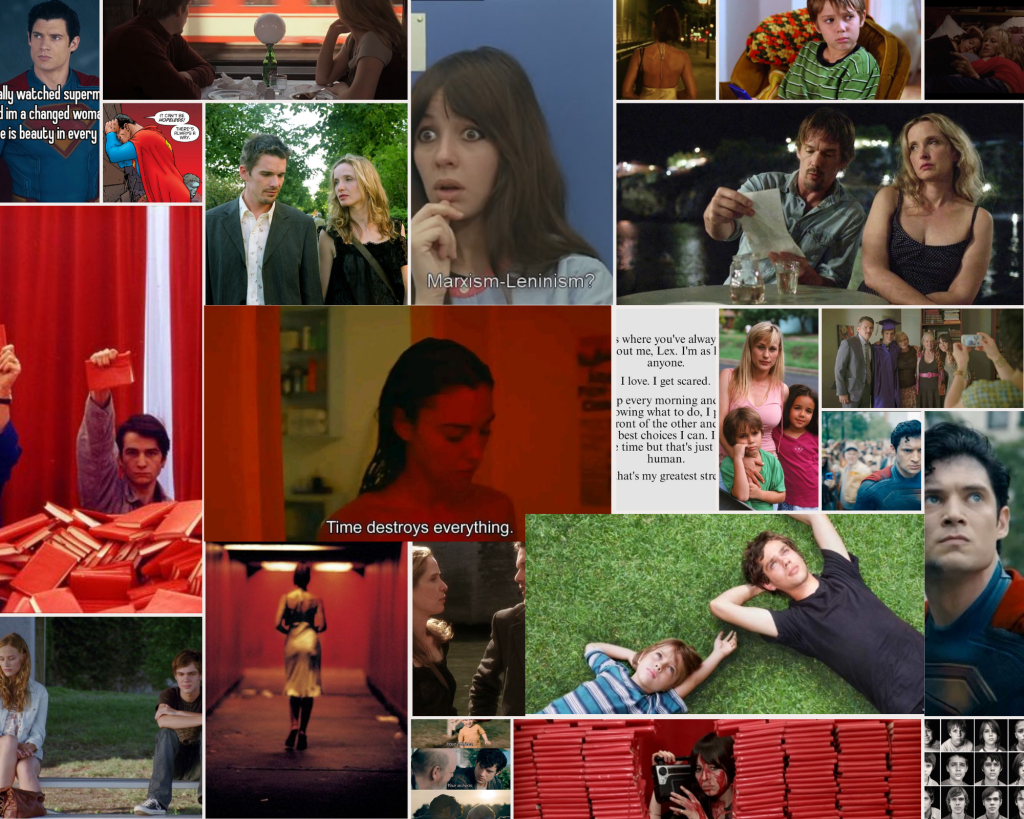
Linklater’s film Boyhood (2014) is one of the most peculiar movies I have ever seen. Not because of its contents, but because of its concept. Linklater filmed one boy and his family over the span of twelve years, allowing the actors to age naturally, their performances shaped by their lived experiences. There’s no makeup, no CGI, it’s all candid. We literally watch a boy turn into a man. The result isn’t flashy, the plot is mundane, all it is is scenes of a life unfolding before us. Linklater uses this to show us that change isn’t always dramatic or particularly rapid. The decision to let the actors age naturally turns time itself into a character. We aren’t simply told that Mason is growing up we see it. We feel the strangeness of watching years slip past in a matter of minutes This unforced realism gives the film an intimacy that more manufactured productions can’t achieve.
What’s striking is how Boyhood shows that life rarely offers us clean beginnings and endings. Mason doesn’t become someone entirely new from one scene to the next; instead, he is subtly shaped by school, family, friendships, and heartbreaks. The film insists that growth is a slow , at times, boring process, one that’s often invisible while it’s happening but undeniable in hindsight.
In that sense, the “mundane” quality of the film isn’t a flaw — it’s the point. Linklater is saying that this ordinariness is life: the car rides, the backyard conversations, the dinners around the table. The extraordinary thing is not that any one moment defines us, but that time keeps moving, and we change with it whether we notice or not.
The Before Trilogy (Before Sunrise, Sunset and Midnight) is a perfect example of time. Each film set exactly nine years apart, and instead of filling the gap where the last one left off, Linklater let’s it hang in the air. Allowing us to see the their lives on HIS terms. These three films in particular, are very important to me, because we watch the relationship between the two main characters (Celine and Jesse) flourish and even at times, slightly wither. They are not fixed characters, they are constantly changing, carrying new perspectives and new burdens at each visit. To quote Ethan Hawke; ‘Before Sunrise is what it could’ve been, Before Sunset is what it should be and Before Midnight is what it is.’ With the intense dialogue and the lack of context we are left feeling as if we are bystanders, eavesdropping on the same two strangers over the span of 27 years.
Other directors have played with time in different (and often more aggressive) ways, one that comes to mind is Gaspar Noe, a controversial French (of course) director. His 2001 film Irreversible, takes a brutal event and tells it in reverse. Without delving too much into the film, as it was one that disturbed me and one I still have very conflicted feelings about. I’ll say this, the story is told in a violently fascinating way. What begins in chaos, dizzying camera work, assault, revenge, eventually becomes tender and calm. The motto of the film ‘time destroys everything’ is overtly pessimistic, but it was one that lingered over me. Noe uses time not to comfort or heal the viewer (or the characters). but to unsettle and disorient. He throws away chronology. And in doing so, he flips the structure of the narrative redemption on its head. We don’t get closure, we don’t see true change, we see a wound that hasn’t opened yet. And that is the most beautiful thing about that harrowing film, the way Noe is able to show us that time is not always so beautiful.
Cinema is also inherently political, through plot themes, characters and even its aesthetics. It shows us the political and social climate of either the past or the present. Whether it’s intentional or not, it documents culture and political shifts. Take Jean Luc Godard’s 1967 film ‘La Chinoise’, which is about a group of Parisian students that embrace Maoist ideology. The film is both a product of its era and a mirror to it, a prediction, almost, to the political unrest that was about to erupt throughout France in the upcoming year.
While researching this post, I could not help but mention the dialogue surrounding the most recent Superman film. Which is a not so subtle criticism on Israel and the current genocide in Palestine. In particular, the backlash and angry rhetoric directed at actor David Cornswet’s costume, specifically ‘The Truth, Justice, and The American Way’ slogan stitched into the suit. It has reopened many conversations about US imperialism, nationalism and Hollywood’s complicity in thinly veiled propaganda. The cultural conversation around Superman reminds us that film is never just entertainment.
Everything is political, whether it is intentional or not. My main philosophy when I watch films, is one that the crazy Slovenian philosopher, Slavoj Zizek taught me; ‘mostly the way I use cinema is to use it to illustrate where we are today ideologically.’ The thoughts that run through my head usually are; ‘what does this film want me to believe?’ ‘What version of reality is this film selling me?’ ‘Who benefits from it, and who is erased by it?’
Whether it’s Linklater’s gentle reflection on personal change, Noe’s unsettling undoing of narrative comfort, or even Godard’s playful, yet poignant critique of revolutionary youth, cinema always reveals something about the time in which it was made. Even the most apolitical films are saying, or making an observation about the moment it was made, more often than not, on what they chose to ignore.
Change is inevitable, it is not something that we can undo. But how we portray it, is unique to us, what we chose to remember, accelerate, reverse or forget, tells us everything about our values, our fears and the system we all live in. And film, no matter what, captures us all.
 Deep Sea Diver
Leave a comment