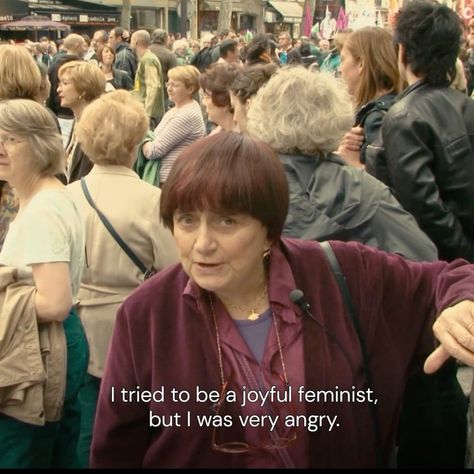
When I was 16, my friend asked me if I considered myself a feminist, I laughed and said no. I remember she stared at me in disbelief, as if what I said was completely irrational.
I didn’t seem to have a reason behind my statement, except for what I thought was feminism at the time (equal pay and the me too movement) didn’t interest me. Shamefully I admit, I thought it was boring, a thing of the past, that the liberation of the working class was much more interesting. Now, at 19 I seemed to have gone in the opposite direction, I view myself not only as a feminist, but as an intersectional feminist. One that believes in the liberation of ALL groups.
But I cannot help but wonder where and when I got radicalised? What changed in the three years since my denial? Was it my own experiences, my acceptance of being a woman? My education in school? The media I consumed?
I am very fortunate, to have been brought up in an extremely political family. The idea of ‘no politics at the dinner table’ was extremely foreign to me. As long as I can remember, it has always been apart of my own family’s routine. I found it embarrassing in my early teens, envious of the girls around me.
Embarrassed that I have read Animal Farm, that I knew who AOC was, the ins and outs of the Human Rights UN Bill, which I once recited to my dad at the dinner table, claiming he had ‘infringed on my right to privacy’. (Even at fourteen I was very pretentious!) I wanted, to put it simply, to be like everyone else.
I felt that the information I had gathered from the nightly conversations with my family was useless to me, boring. I wanted nothing to do with politics, I wanted to be different from my family.
So instead I cast it aside, thinking that it was simply something different, that it could not be applied to anything more than current or past affairs. We spoke about everything at dinner (well my parents and my brothers talked, I mostly listened or tried to get their attention), the refugee crisis, climate change, the slow rise of fascism in the US. Everything. What was not often mentioned, though, was Feminism.
I didn’t know anything about it in those years, I never thought too deeply about my own womanhood, or what it meant to be a woman. Of course I knew it wasn’t easy, I knew that women suffered in ways men did not. But for whatever reason, it was never something that crossed my mind. Not that my mother isn’t a feminist, or that anyone in my family aren’t interested in it. I guess we were more so focused on the economic and cultural side of things, rather than the social aspect (in some ways).
When I thought of feminism, I thought of the suffragettes and the right for women to work. Both things I found, of course, silly. In the sense that women should not have to fight for such basic rights, that it should have just her given to them. Which I suppose, now that I think about it was the whole f*cking point of those movements!
Things like that felt so ancient, I couldn’t imagine a world in which my father owned me, that I did not have any rights outside of the patriarch of my household (not that he is or was ever the patriarch, no offence Baba.). But I suppose that’s what they all fought for, which now that I’m older, I understand much better.
My first proper introduction to Feminist Theory, was my year 12 history class. We went through second wave feminism and studied two texts (one more than the other), Simone De Beauvoir’s The Second Sex and Betty Friedan’s The Feminine Mystique. We looked at The Feminine Mystique more closely, as that is actually what triggered the second wave. It was something that played a large and important part in the progression of the feminist movement. But something that was extremely exclusive, Friedan, the face of the movement at the time, was homophobic, racist and classist. Referring to lesbians as “the lavender menace,” she failed to acknowledge black women or working class women throughout her work.
She denied De Beauvoir’s impact on her work and was herself, self-serving. Despite my dislike of Friedan, I suppose her work is an extremely important part of feminist and worldwide history and that isn’t something to be denied. But, reading about her and her work did not move me or make me feel any differently about feminism. Until, eventually we read a few pages from bell hooks’ book Margin To Centre. Reading this made me feel far more interested in feminism, reading and learning about a side of feminism that I had never heard about before. A black woman’s perspective of the progression of white feminism and the dehumanisation of black women in the West, even to this day, cannot be ignored!
Take the current conversations surrounding Cynthia Erivo and Ariana Grande, society has humiliated Erivo, painting her out as this masculine and overprotective of Grande. Whereas Grande is viewed as a dainty and vulnerable woman. The dragon guarding the princess. It is disgusting, the dehumanisation of black women has been something that has been around since the beginning of time. Constantly, they are not being given their flowers for the effort and work they put into society and the world.
I recently reread Angela Davis’ Race, Women and Class. The harrowing stories of what they were put throughout slavery and even afterwards was devastating and hard to read. Hearing that Hattie McDaniel wasn’t even allowed to accept her Oscar due to a ‘no coloured’ policy is outrageous. Learning through the eyes of Cheryl Dunye while watching The Watermelon Woman, taught me about the erasure of queer black women during the golden age of cinema.
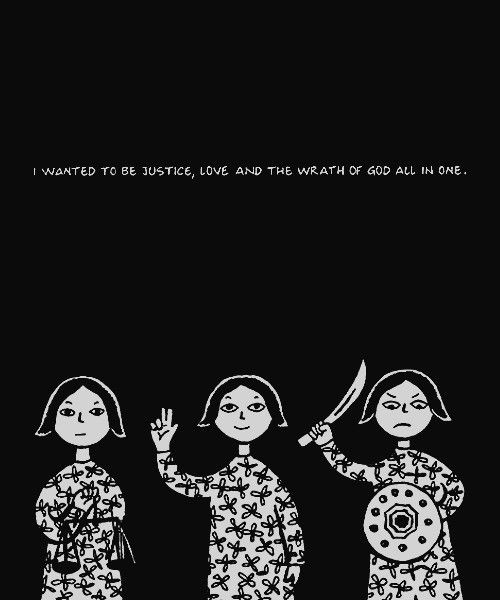
The fact that even to this day, women of colour are demonised and treated as inferior and constantly being targeted is frankly depressing. Davis satisfied me, I found her view on feminism and socialism deeply enjoyable, finally I found a version of feminism that I wanted to understand better. That made me want to delve into my own womanhood, my own personal morals and beliefs, the way I see the world. All of it, I wanted to understand the world around me better, from all sides, as best as I could.
I began watching The Handmaids Tale, something that scared me so awfully. But something that made me realise something, under a regime like that, there is no race, no sexuality, nothing. There is only what is between our legs. That, at the end of the day, if the world were to ever fall under a regime so tough, so awful, as the one in Gilead. The ones in control, the billionaires, the fascists, do not truly care. Our gender, our race, our sexuality it will all dissolve into the margins. That, is what The Handmaids Tale taught me.
That when we strip it all back, we are all just people fighting to be equals. Feminism, in my eyes, is a softly packaged idea of Socialism. It is a pill that can be swallowed so easily by contemporary society. That is what I’ve learnt.
And what worries me, is this rise of ‘psuedo’ feminism, or as others call it, choice feminism. The idea that anything a woman does, any choice she makes is an inherent feminist one. Which in my mind, is thinly veiled conservatism. Absolving a woman of any sort of criticism or backlash is naive and wrong. We ask for equality, yet we are not allowed to criticise a woman without being deemed as a woman hater?
Everyone, in some way, is influenced by the patriarchy, in the roles we take within our relationships, the way we are within our careers, even the way I write my own characters. No one is a perfect feminist, no one is a perfect socialist. I find it hard now, not to see the political side of anything I consume, constantly my mind is asking questions like these, it is both a blessing and a curse. I feel that I’m unable to enjoy anything entirely, without looking at it critically, what dog whistles am I hearing?
One mustn’t strive to be perfect, one must strive to do the best one can. Deinfluencing ourselves, recognising the bullshit we see, learning, growing, being open. That is what we need, as a society to strive. Change and a willingness to understand, is what radicalised me. Reflecting on my own actions, the things I’ve done, a willingness to understand others, that is what radicalised me. But also forgiving my younger self, allowing myself to accept that my lack of exposure to feminism was because of my own naivety and reluctance to understand truly, of what it means to be anything at all.
 Deep Sea Diver
Leave a comment